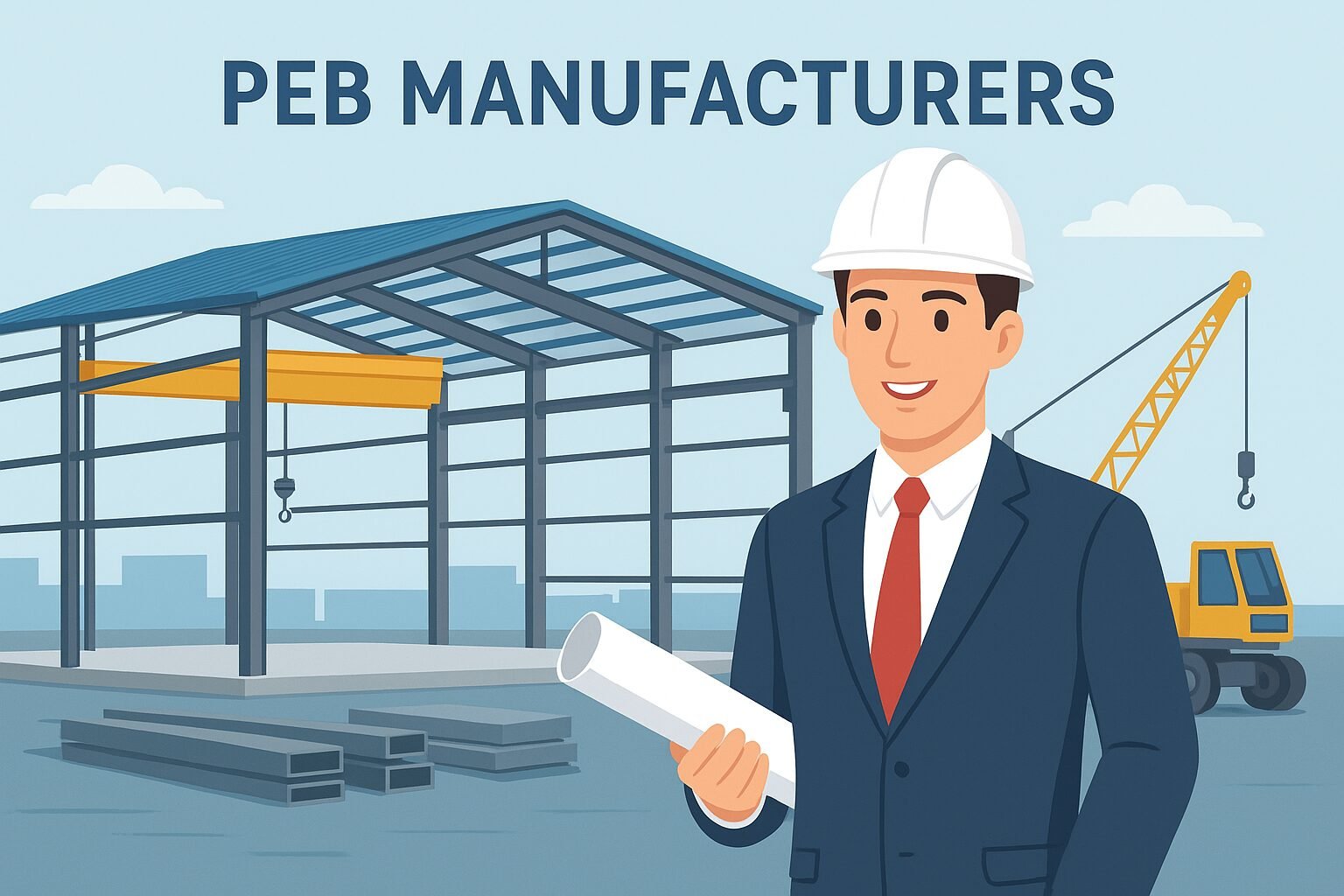
In the world of industrial and commercial construction, one truth is becoming increasingly clear: pre-engineered buildings are no longer a niche solution but the mainstream of modern steel construction. Whether it is a logistics park, a manufacturing hub, or a multi-site expansion, leaders across industries are embracing PEBs for their ability to combine speed, performance, cost efficiency, and sustainability. Yet while demand is rising sharply, one factor still separates successful projects from costly overruns—choosing the right manufacturing partner.
This task is about far more than picking names off a vendor list. The choice of manufacturer directly determines how quickly steel reaches the site, how reliably the project is delivered, and how the building performs over decades of use. It requires trust built on engineering rigor, precision in fabrication, and reliability in delivery. Selecting a manufacturer is, in effect, choosing the level of certainty you want for your project’s outcomes.
The market momentum for pre-engineered buildings has never been stronger. India’s industrial growth and global acceptance of prefabrication have created opportunities that reach far beyond warehousing. Today, PEBs are being deployed in manufacturing facilities, commercial complexes, educational institutions, and even mixed-use retail developments. Their appeal lies in how directly they address the challenges every project leader faces: compressed timelines, reduced risks, and control over lifecycle costs. Factory fabrication shortens site schedules, standardized systems reduce uncertainties, and efficient design lowers operating and maintenance costs. Not every project is a perfect fit—highly irregular architecture or extreme customization may justify a hybrid approach—but aligning manufacturer capability with project needs has proven to be the smartest path forward.
Too often, however, projects stumble due to one recurring mistake: pursuing the lowest upfront cost. Procurement teams under pressure to deliver savings award contracts based simply on price, only to discover that the so-called savings are short-lived. Inadequate coatings allow corrosion to creep in, weak detailing results in costly repairs, and poor coordination between design and erection teams leads to costly delays on-site. The projects that fall into this trap often spend years paying more in rework, energy, and maintenance costs—ironically turning the cheapest contracts into the most expensive outcomes.
The strongest project leaders avoid these pitfalls by applying discipline in their selection process. Rather than focusing solely on cost comparisons, they carefully evaluate the fundamentals that create long-term certainty. Engineering rigor is non-negotiable. The right partner brings not just design promises but demonstrable in-house capabilities, validated through code compliance, wind and seismic designs, and a culture of value engineering. Fabrication quality is another vital test. Manufacturers who invest in robust quality systems, maintain certifications, follow precise welding standards, offer coating systems suited to the site environment, and provide full traceability of materials are the ones that prevent hidden weaknesses from appearing years later.
Delivery capacity and logistics are equally important. The size of a production line, weekly throughput, and sequencing of shipments are the practical realities that determine whether a project stays on schedule. Site sequencing in particular is where timelines can be made or broken, because even the best components are useless if they arrive in the wrong order and hold up installation. Beyond that lies the performance of the building envelope itself. Contractors who focus only on steel skeletons miss the fact that insulation strategies, roofing assemblies, and thermal and water performance determine whether operational costs remain predictable or spiral over time.
Sustainability is now as much a compliance requirement as it is a responsibility. Clients are actively demanding measurable practices, from documented recycled content and waste minimization in manufacturing to certifications that support LEED, IGBC, or GRIHA benchmarks. Manufacturers who cannot provide this information risk disqualifying themselves from serious projects, as sustainability has quickly moved from being a bonus to becoming a baseline expectation.
For leaders who want to avoid surprises, a few simple practices make a world of difference. Evaluating lifecycle costs rather than only upfront capex ensures that energy, maintenance, and downtime are factored into decision-making. Asking for inspection and welding documentation before contracts are signed creates clarity about quality expectations. Reviewing erection safety standards and construction sequencing up front reduces on-site risks and helps protect hard deadlines. These professional habits often mean the difference between a predictable, high-performing building and one riddled with delays.
Consider the example of a 30,000 square-meter coastal warehouse with a strict 24-week delivery timeline and energy performance requirements. One manufacturer might offer a lower quote by using ordinary coatings and avoiding insulated roof systems, while making vague commitments on delivery. Another might come in slightly higher but propose coastal-grade coatings, proven insulated roofing performance, and a detailed shipment plan that ensures steady progress on-site. Six months later, the decision becomes clear. The client who chose the latter sleeps easier, avoiding corrosion issues, energy inefficiencies, and timeline risk—and ultimately secures greater lifetime value despite the higher upfront investment.
The final takeaway is simple. Pre-engineered buildings are not commodities. They are precision systems, integrated across design, fabrication, logistics, and erection. Choosing a partner is not about awarding a supply contract, but about building trust in performance and outcomes. The vendor ecosystem is maturing, competition is widespread, and buyers have more choice than ever. That makes this the best possible time to be selective. Projects succeed when leaders ask deeper questions about engineering depth, quality standards, delivery capacity, and sustainability, and when they recognize that lowest price does not mean lowest cost.
In the end, what every organization needs is not just a building, but peace of mind. The right PEB manufacturer is the one who cuts risk, enhances performance, and delivers confidence for decades to come. Reliable partners don’t just put up frames—they build certainty into your business growth.